

Research library
Research for planning Philippines-based teams
Sourced articles about call operations, service workflows, and staffing decisions.
Call Recording Derived Artifact Inventory Study
A reproducible method for checking whether transcripts, summaries, exports, captures, analytics, and backups follow recording boundaries.
Callback Promise Verification Study
A reproducible method for testing whether recorded callback promises reach an accepted owner and a confirmed outcome on time.
Independent Call Outcome Coding Agreement Study
A reproducible method for measuring how consistently independent reviewers classify calls under a frozen outcome guide.
Outbound Suppression Latency Study
A reproducible method for measuring how quickly preference and eligibility changes reach lists, dialers, vendors, and campaigns.
Warm Transfer Context Retention Study
A reproducible method for testing which verified facts, uncertainties, and caller commitments survive a warm transfer.
Abandoned Call Denominator Reconstruction Study
A reproducible method for testing whether platform exclusions and short calls materially change a reported call-abandonment rate.
Caller ID Attestation Outcome Study
A reproducible method for studying how caller-ID attestation relates to answers, labels, complaints, and conversions.
Recording Redaction Completeness Study
A reproducible method for checking whether audio, transcripts, captures, and exports apply the same redaction boundary.
Speech Analytics Language Bias Review
A reproducible method for assessing whether transcription and classification errors differ by language and audio conditions.
Call Transfer Graph Loop Analysis
A reproducible research protocol for which routing paths create repeated transfers without accepted ownership with bounded authority, traceable evidence, and caller-safe recovery.
VirtualAssistantCallCenter Control Change Traceability Research
A source-backed virtual assistant call center operations study of whether rule changes remain attributable, dated, and reversible.
VirtualAssistantCallCenter Handoff Completeness Observation
A source-backed virtual assistant call center operations study of whether receiving teams can continue work without private clarification.
VirtualAssistantCallCenter Minimum Access Effectiveness Study
A source-backed virtual assistant call center operations study of whether permissions support required work without unnecessary exposure.
VirtualAssistantCallCenter Queue Wait-State Evidence Study
A source-backed virtual assistant call center operations study of whether waiting reasons and owner acceptance explain queue age.
VirtualAssistantCallCenter Reviewer Agreement Reliability Study
A source-backed virtual assistant call center operations study of whether two reviewers reach reproducible conclusions from the same evidence.
Call Disposition Reviewer Agreement: A Reliability Study
Evidence-led research methods for call disposition consistency, with clear owners, boundaries, records, and review tests.
Call Script Change Effects: A Bounded Before-and-After Study
Evidence-led research methods for call script change effects, with clear owners, boundaries, records, and review tests.
Callback Delay and Caller Outcomes: An Evidence Study
Evidence-led research methods for callback delay, with clear owners, boundaries, records, and review tests.
Caller Repetition Burden: An Evidence Review
Evidence-led research methods for caller repetition, with clear owners, boundaries, records, and review tests.
Warm Transfer Failure Patterns: A Traceability Study
Evidence-led research methods for warm transfer failure, with clear owners, boundaries, records, and review tests.
What evidence should reopen a completed call disposition?
Research into corrections, later evidence, and ownership when a closed call record no longer describes the caller's request.
Which callback preference should govern when customer records conflict?
Research into channel, number, timing, consent, and freshness conflicts before a virtual assistant initiates or queues a callback.
When is a hold-queue wait estimate accurate enough to tell a caller?
A research protocol for comparing announced wait estimates with caller-level outcomes without turning a forecast into a promise.
Can an overflowed call return to the right queue without losing ownership?
A research method for following calls through overflow vendors, backup teams, voicemail, and return paths while preserving context and accountability.
Does a warm-transfer consultation give the receiving owner usable context?
A research design for testing the private consultation step before a caller is connected, including relevance, acceptance, and privacy boundaries.
Can an AI call summary be traced back to what the caller actually said?
A claim-level research method for evaluating additions, omissions, attribution errors, uncertainty, and human review in AI-generated call summaries.
Should a virtual call team trust the number shown by caller ID?
A research method for testing whether virtual receptionists use caller ID as a routing hint without treating it as proof of identity or authority.
How quickly does a do-not-call request leave every outbound queue?
A research design for measuring whether entity-specific do-not-call requests propagate across dialers, campaigns, vendors, retries, and reopened lead records.
Which local time should control an outbound follow-up call?
A research protocol for preventing outbound calls outside approved local windows when phone number, service address, stated location, and timezone data conflict.
Does the voicemail greeting match what the call team can actually deliver?
A research method for finding stale hours, callback promises, menu instructions, and emergency directions across active voicemail and closed-hours greetings.
Can a call team prove who approved an exception to the script?
A research protocol for tracing exception requests, decision authority, temporary wording, affected queues, expiry, and rollback.
Does an outbound callback verify the recipient before revealing context?
A study of callback introductions, recipient verification, minimal disclosure, wrong-party recovery, voicemail, and closure evidence.
Can a call team keep payment-card details out of general notes?
A research method for tracing payment-detail exposure across calls, notes, messages, exports, and exception recovery.
Do relay calls receive the same intake outcome as voice calls?
A field study for testing whether relay calls reach the same services, decisions, and follow-up ownership as comparable voice calls.
What can a call team do when someone calls for another person?
A study protocol for separating message-taking, verified authority, permitted disclosure, urgent routing, and accountable follow-up.
When does a phone appointment cancellation become effective?
A reproducible study of cancellation request time, identity checks, calendar updates, downstream notifications, and exception ownership.
Does a corrected callback number reach every active call queue?
A research protocol for tracing phone-number correction, source authority, queue propagation, suppression, and closure evidence.
Does a phone-support answer expire when its source changes?
A research method for testing source ownership, answer versioning, expiration triggers, assistant access, and correction evidence.
How much sensitive detail should a callback voicemail contain?
A reproducible review of voicemail purpose, authorization, minimum detail, callback routing, access risk, and correction handling.
When should a warm transfer stop waiting and use a fallback?
A decision-grade study of transfer initiation, destination readiness, acceptance time, caller updates, fallback, and ownership.
When is an abandoned inbound call eligible for a follow-up attempt?
A reproducible study of abandoned-call evidence, caller intent, consent, suppression checks, ownership, and follow-up outcomes.
Can phone scheduling detect a calendar conflict before confirming an appointment?
A reproducible study of calendar availability, reservation holds, simultaneous booking, confirmation, and conflict correction.
Does a caller’s withdrawal of contact consent reach every follow-up queue?
A reproducible study of consent withdrawal capture, suppression propagation, queue checks, ownership, and correction evidence.
Does phone intake preserve and route a caller’s language-assistance request?
A reproducible study of language preference capture, interpreter boundaries, routing, acknowledgment, and correction.
Can a voicemail workflow prove that recordings are retained and deleted under policy?
A reproducible study of voicemail retention, access, transcription copies, deletion jobs, exceptions, and evidence.
Do phone-booked appointments preserve the caller’s intended timezone?
A reproducible study of appointment timezone capture, conversion, confirmation, calendar storage, daylight-saving boundaries, and corrections.
Does phone intake capture a service address accurately enough to act on?
A reproducible study of address capture, read-back, geocoding boundaries, corrections, and routing evidence in phone intake.
Does phone intake avoid creating duplicate CRM contacts?
A reproducible study of contact search, match confidence, record creation, merge review, ownership, and correction in phone intake.
Does phone support capture account references without creating avoidable errors?
A reproducible study of account-reference capture, masked read-back, lookup boundaries, mismatch handling, and correction evidence.
Does an urgent-call handoff close the acknowledgment loop?
A reproducible study of urgent-call classification, notification, owner acknowledgment, retry, fallback, and caller-safe closure.
Does phone scheduling match each appointment to the right service duration?
A reproducible study of service selection, slot length, buffers, exceptions, calendar evidence, and correction in phone scheduling.
How long can a call note remain outside the CRM before the handoff becomes unsafe?
A reproducible study of note completion, CRM write-back, queue visibility, stale decisions, reconciliation, and exception ownership.
Who owns recovery when an intake call disconnects?
A reproducible study of disconnect detection, callback permission, partial records, queue ownership, reconnection, and safe closure.
Can a call team prove where each lead-qualification answer came from?
A reproducible study of caller statements, assistant observations, inferred fields, corrections, and owner decisions in lead qualification.
Does call intake preserve the caller's preferred contact channel?
A reproducible study of channel preference, permission, accessibility needs, fallback choices, updates, and downstream use after calls.
When should a call-intake form permit a required-field bypass?
A study of justified exceptions, caller refusals, unavailable evidence, override authority, downstream usability, and correction.
Are callers given accurate expectations before being placed on hold?
A field-study method for comparing stated hold expectations, actual events, caller choices, reconnect paths, and queue conditions.
When does an escalation notification become a confirmed handoff?
Research for separating notification creation, channel delivery, human acknowledgment, ownership, and recovery in call operations.
How should a call team verify holiday-hours routing before relying on it?
A reproducible study of effective dates, source ownership, route tests, caller wording, and exception recovery for holiday schedules.
How should supervisor routing overrides be audited?
A decision-grade method for reviewing override authority, reason evidence, temporary scope, caller impact, restoration, and recurrence.
How fresh must an on-call roster be for after-hours call routing?
A field study for measuring roster changes, contact attempts, acknowledgments, and safe fallback ownership after hours.
When do calendar and CRM records disagree after a phone booking?
A field study for reconciling appointment details across the call note, calendar, confirmation, and CRM without treating one system as automatically correct.
When should a temporary appointment hold expire during a phone booking?
A field study for measuring calendar-hold expiry, caller confirmation, and safe release of appointment capacity.
How can a call-quality review prove that coaching actions were closed?
A study of the evidence connecting sampled calls, specific coaching actions, owner acknowledgment, workflow repair, and later verification.
How should a call-quality team migrate to a revised scorecard?
A field study for comparing scorecard versions without mixing definitions, hiding reviewer drift, or overstating improvement.
Can a customer win-back queue reliably stop calls after an opt-out?
A research design for tracing customer-specific stop requests from the call through suppression, vendor handoff, retry queues, and quality review.
Which customer fields should an inbound call assistant be able to see?
A least-privilege research method for testing whether inbound call work exposes only the customer fields needed for greeting, routing, and approved service.
What should an order-status assistant disclose before escalating a call?
Research for defining and testing the boundary between a useful order update, unnecessary customer-data disclosure, and a manager-owned exception.
What evidence should follow a lead into an outbound call queue?
A field study for tracing lead source, permission, suppression, and campaign authorization before outbound follow-up.
How should a call team verify service-area eligibility without guessing?
A field study for testing address, boundary, and exception handling before a virtual receptionist promises service.
Can appointment-intake corrections be traced to their source?
A field-level study of whether corrected appointment records retain enough provenance for review without assuming the final value is accurate.
Studying callback records that reopen after closure
A cohort design for measuring reopened callback work while distinguishing administrative closure from resolution of the caller's need.
Measuring drift in the "other" call disposition category
A prespecified review that tests whether growing use of a catch-all disposition signals taxonomy gaps without treating frequency alone as proof.
Measuring delays in routing callers who request an interpreter
A privacy-conscious study design for timing interpreter-request handoffs without treating speed as proof of effective language access.
Auditing manual priority overrides in an urgent call queue
A record-based method for checking whether manual queue overrides follow written criteria while separating process adherence from caller outcomes.
Does chunked callback-number readback reduce transcription errors?
A controlled study design comparing digit-by-digit and chunked readback while separating data-entry accuracy from successful callback outcomes.
How should teams test emergency-keyword call routing?
A retrospective review design for measuring missed and unnecessary escalations without claiming that keywords can determine real-world urgency.
Can a review queue improve repeat-caller record linkage?
A precision-and-recall study for suggested record matches that keeps uncertain identity decisions out of automated call handling.
Measuring whether promised callback windows are actually met
A timestamp-based audit design for callback-window adherence that separates operational timeliness from resolution and customer satisfaction.
Which transfer-summary fields survive a live call handoff?
A blinded audit design for testing required-field completeness before and after transfer without equating documentation with service success.
Measuring false-positive after-hours escalations
A review method for testing urgent-call rules without treating manager disagreement as proof that an agent made an error.
When does an unowned callback become a control failure?
A cohort method for measuring callback age, owner gaps, reassignment, and closure without inventing a universal response target.
Does structured address readback catch call-intake errors?
A controlled study design for testing whether field-by-field address readback catches more errors than one uninterrupted repeat.
Testing how call teams capture language preference
A study design for comparing open language-preference prompts with assumptions based on accent, name, or prior records.
Can reviewers trace a phone answer to its approved source?
A blinded review design for measuring whether call answers point to the correct policy version, passage, and approval state.
After-hours vendor authorization control study
A source-based protocol for auditing whether urgent vendor requests stay within approval, identity, and payment boundaries.
Appointment time-zone readback error study
A reproducible design for testing whether explicit time-zone readback reduces scheduling corrections and missed handoffs.
Sensitive-data minimization in call notes
A source-corpus review and audit design for testing whether call notes retain only the information needed for a handoff.
Caller name spelling confirmation: an evidence design
A source-based study design for testing whether respectful readback reduces name-record errors without burdening callers.
Measuring emergency escalation acknowledgment latency
A bounded study design for measuring whether urgent call alerts reach and are accepted by the designated human owner.
How should an after-hours call team measure acknowledgment delay?
A research protocol for measuring the handoff between virtual assistants and on-call owners without confusing acknowledgment with resolution.
How accurately do virtual assistants choose transfer destinations?
A sampling method for comparing intended and actual transfer destinations while separating directory defects from assistant routing errors.
Does reading back a callback number reduce errors in call intake?
A field-study design for measuring whether number readback catches transcription errors before a virtual assistant sends a callback request.
Are callback-consent records complete enough to support follow-up?
A documentary study of whether call records show who agreed to follow-up, through which channel, for what purpose, and for how long.
What happens when callers decline an optional intake question?
A mixed-method study of optional-field refusals, assistant responses, and call outcomes without treating privacy choices as poor cooperation.
Can a corrected call note preserve what changed, why it changed, and who approved it?
Research on call-note correction provenance, original evidence, authorized changes, downstream propagation, and virtual assistant boundaries.
Do callers understand what happens when a virtual assistant call queue closes?
Research on whether queue-closure notices communicate availability, next steps, ownership, and urgent-call boundaries without unsupported promises.
How often do scheduled callback records preserve the caller's intended time zone?
Research on whether virtual assistant callback scheduling preserves local time, daylight rules, caller confirmation, and owner acceptance.
What happens when a call transfer destination is closed while the intake queue is open?
A cohort study of transfer-hour mismatches, failed handoffs, caller expectations, fallback ownership, and time-zone evidence.
When does a voicemail callback request become too stale to treat as current consent?
A research method for studying the age, scope, renewal, and ownership of voicemail callback permission without inventing a universal expiry rule.
Call continuity outage drill study
A structured drill for evaluating backup routing, safe fallback notes, owner readiness, and reconciliation after system recovery.
Call disposition consistency study
A review method for testing whether assistants apply the same outcome codes to comparable calls and notes.
Callback window adherence study
A practical research design for measuring whether promised callback windows are met and identifying where ownership breaks down.
Hold abandonment pattern study
A cohort review for locating when callers leave hold and testing whether updates and alternatives improve the experience.
Schedule exception escalation study
A workflow review for measuring whether booking exceptions reach authorized owners with enough context for a timely decision.
Studying Appointment Waitlist Offer Windows and Booking Errors
A cohort design for assessing whether explicit waitlist offer windows fill cancellations without increasing overlap, confusion, or corrections.
Studying Whether Opening Checks Reduce Early-Shift Call Failures
A prospective study design for testing whether a short opening checklist reduces routing, access, and information failures early in a shift.
Evaluating Language Preference Capture and Call Routing Accuracy
A privacy-conscious method for testing whether structured language preference fields improve routing and reduce repeated explanations.
Testing Recovery Paths After an Unanswered Call Transfer
A comparative operations study of whether structured recovery reduces lost calls after a live transfer destination does not answer.
Measuring How Ownership Rules Affect Voicemail Queue Aging
A queue study for evaluating whether named review ownership shortens voicemail age without increasing duplicate or premature closures.
Testing After-Hours Call-Triage Thresholds for Small Service Businesses
A cohort method for evaluating whether after-hours escalation thresholds distinguish time-sensitive calls from work that can safely wait.
When “Other” Takes Over: Studying Call-Disposition Category Drift
A research protocol for detecting when an Other label hides new demand, unclear definitions, or avoidable classification work.
Hold Message Comprehension in Virtual Call Queues: A Practical Evidence Review
An evidence review of how message length, information density, and repetition affect what callers can retain while waiting.
Does a Warm Introduction Improve Virtual Call Transfers? A Study Design
A bounded study design for testing whether a short introduction improves transfer acceptance and reduces caller repetition.
Name-Spelling Errors in Virtual Receptionist Intake: A Measurement Framework
A field-ready research design for measuring where name capture fails and whether readback reduces downstream corrections.
How can bilingual call escalation research test whether the next step was understood?
A research framework for reviewing bilingual virtual assistant escalations through comprehension evidence, language preference, ownership, and correction.
What evidence shows that interrupted call intake can recover without losing the caller's request?
A research design for measuring whether interrupted virtual assistant calls resume with accurate context, consent, ownership, and a traceable outcome.
How can a business detect version drift in virtual assistant call scripts?
A documentary research method for finding when approved call instructions, assistant behavior, and local business rules have stopped matching.
What should a callback study measure when caller identity details do not match?
Evidence-led research on resolving callback identity mismatches without exposing personal data, guessing identity, or overstating successful contact.
Does a warm transfer reduce how often callers must repeat their reason for calling?
Research on measuring caller repetition across virtual assistant warm transfers without confusing a successful connection with a complete handoff.
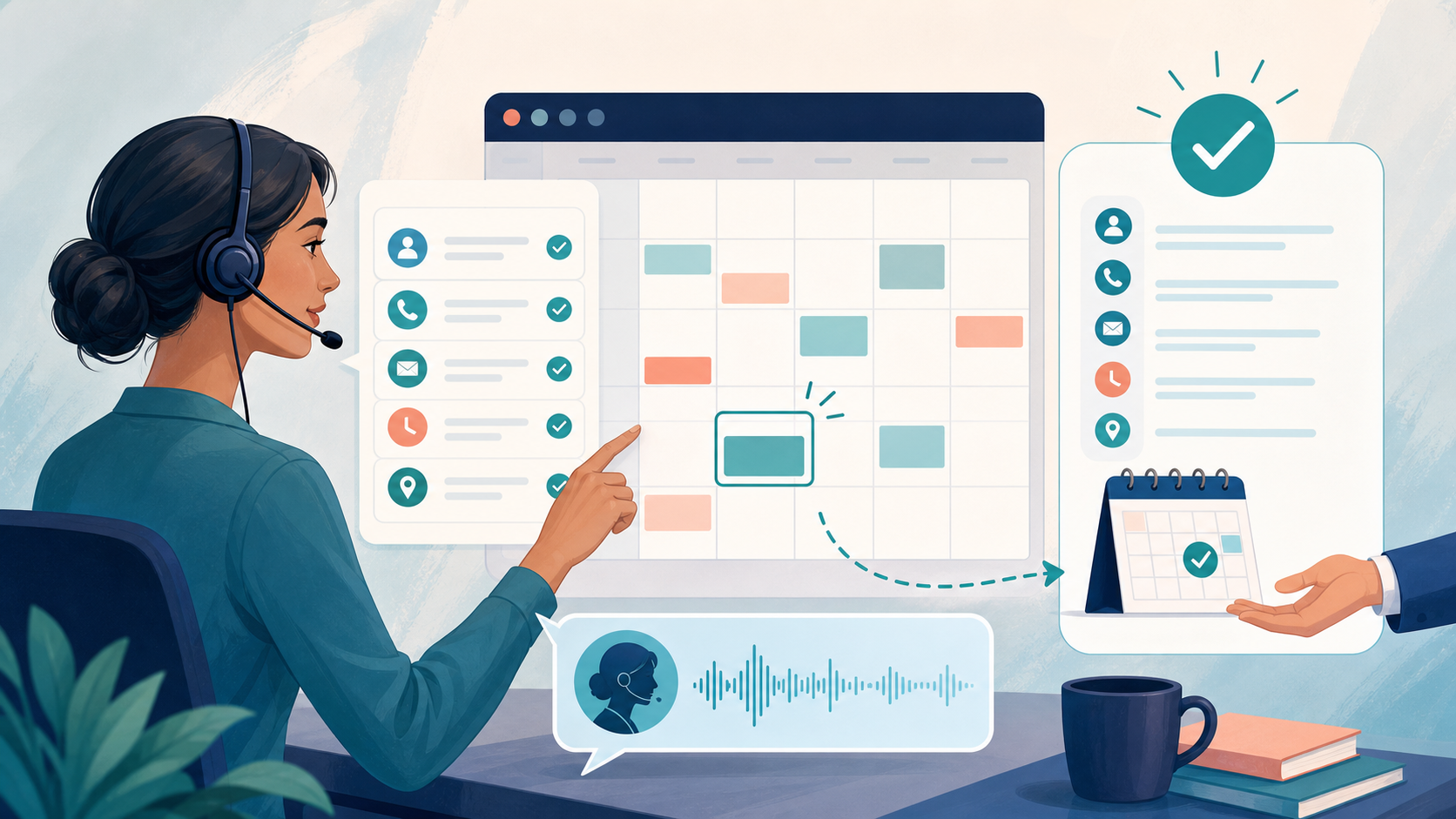
Which intake fields prevent virtual assistant appointment errors?
Research on the minimum appointment-intake fields a virtual assistant call center should validate before booking or escalating a request.

What makes a virtual assistant call note useful to the next owner?
A research method for testing whether virtual assistant call notes preserve intent, evidence, ownership, and the next safe action.

How should a virtual assistant call center forecast a small-business call queue?
Research on forecasting answered calls, callback work, and uncertainty before a virtual assistant call center sets coverage rules.
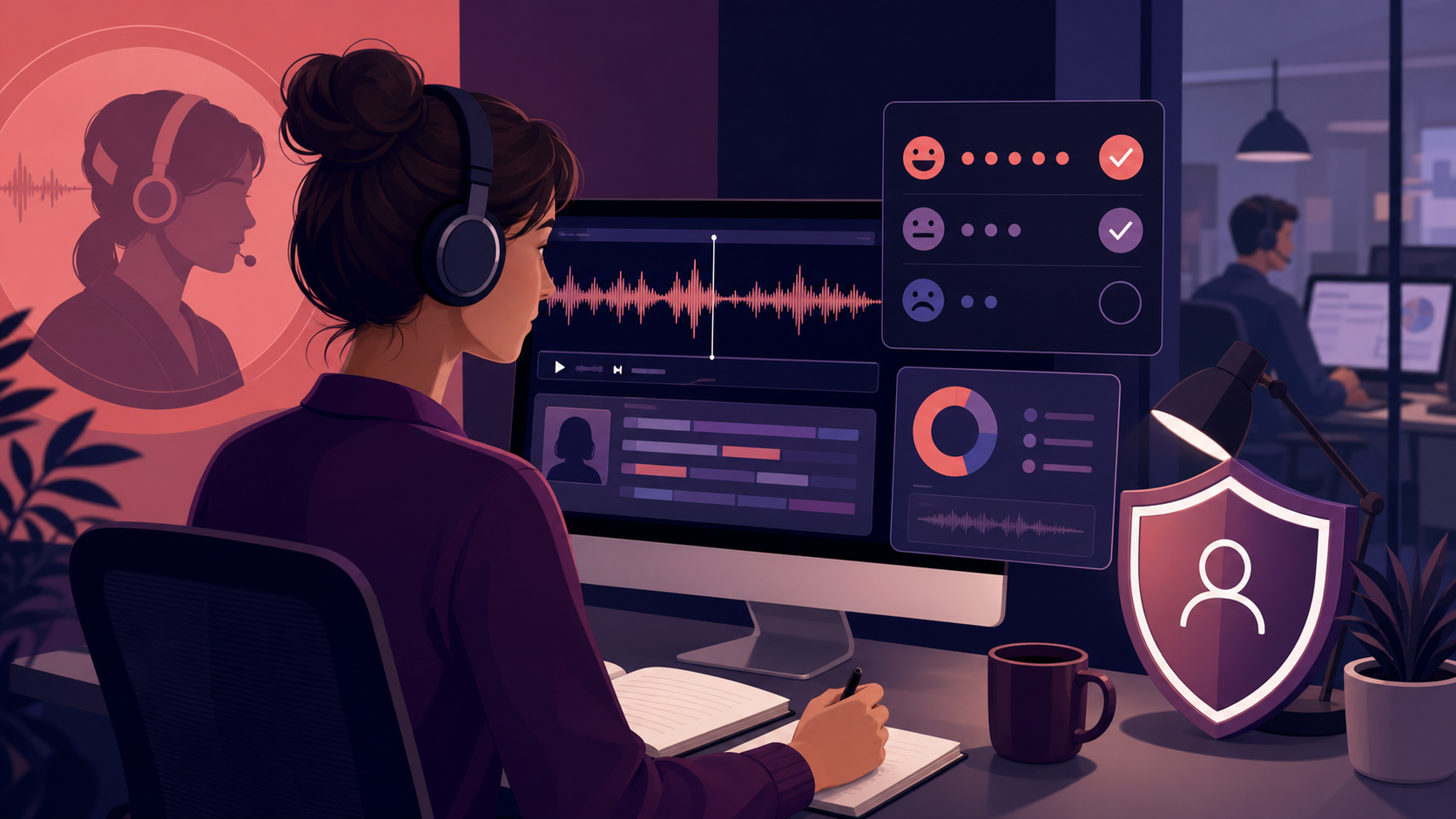
How can a virtual assistant call center review recordings without mistaking volume for quality?
A bounded research method for reviewing virtual assistant call recordings for accuracy, escalation, notes, and caller experience.
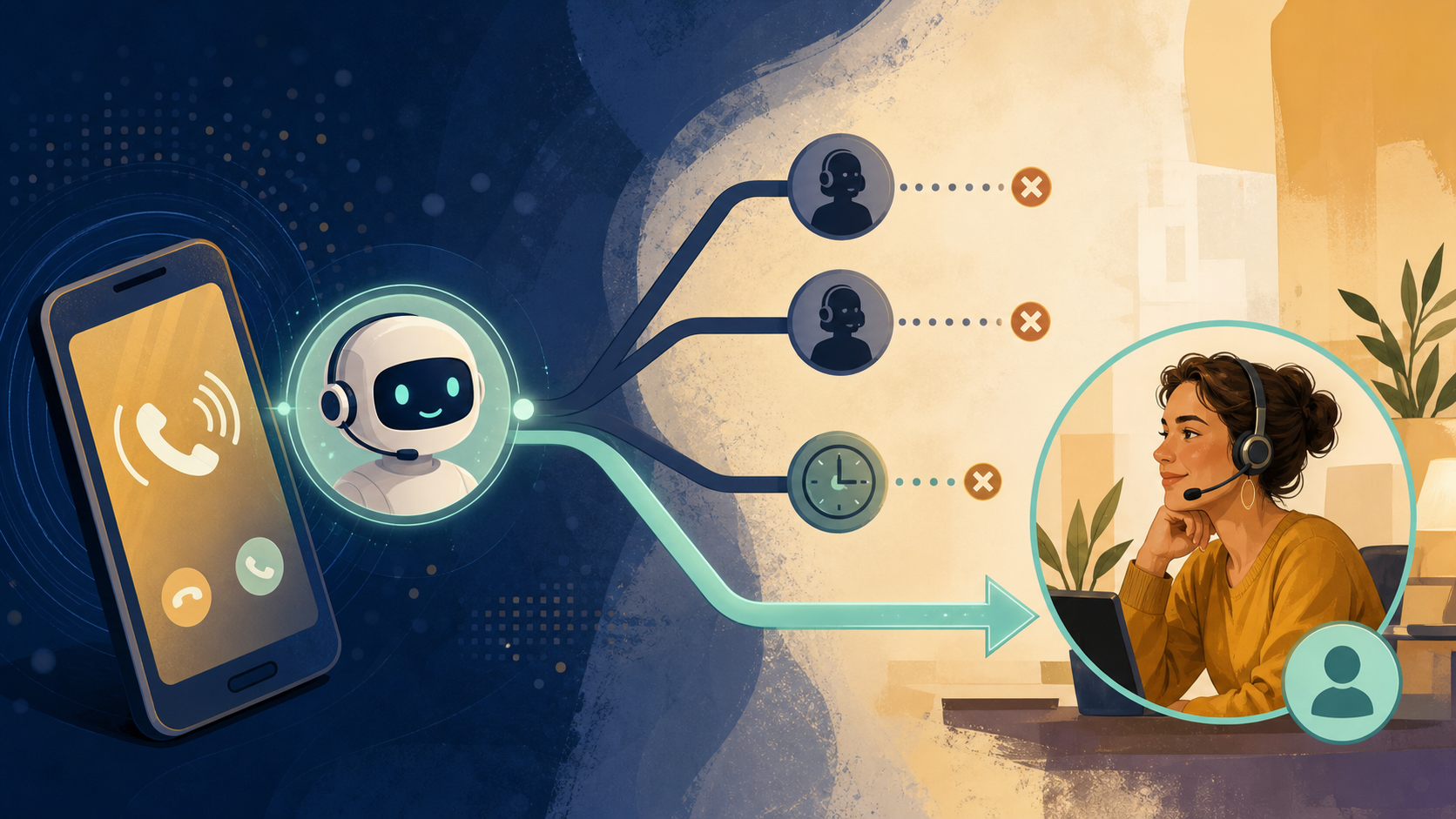
Why do virtual assistant call transfers fail before the owner receives the work?
Evidence-led research on transfer failures, fallback ownership, and safe continuity for virtual assistant call center operations.
What makes an after-hours call handoff reliable for a virtual assistant call center?
A research-backed examination of after-hours call handoffs, owner availability, message completeness, and exception visibility.
Can a virtual assistant call queue prioritize fairly without hiding uncertainty?
A research note on evidence-based call queue priority, transparent exceptions, and owner-controlled escalation for virtual assistants.
Where should a virtual assistant stop during caller identity verification?
Research on setting defensible identity-verification boundaries for virtual assistants handling business calls and sensitive requests.
How much information should a virtual assistant call note contain?
Research on data minimization in virtual assistant call notes, with practical boundaries for intake, routing, retention, and review.
What should a virtual assistant call quality sample actually test?
Research on sampling virtual assistant calls for accuracy, evidence completeness, accessibility, and safe role boundaries.

Research Brief: Call Center Virtual Assistant Operations Access Governance
Research Brief: Call Center Virtual Assistant Operations Access Governance: evidence-led guidance for Virtual Assistant Call Center.

Research Brief: Call Center Virtual Assistant Operations Exception Aging Patterns
Research Brief: Call Center Virtual Assistant Operations Exception Aging Patterns: evidence-led guidance for Virtual Assistant Call Center.

Research Brief: Call Center Virtual Assistant Operations Handoff Reliability
Research Brief: Call Center Virtual Assistant Operations Handoff Reliability: evidence-led guidance for Virtual Assistant Call Center.

Research Brief: Call Center Virtual Assistant Operations Review Consistency
Research Brief: Call Center Virtual Assistant Operations Review Consistency: evidence-led guidance for Virtual Assistant Call Center.

Research Brief: Call Center Virtual Assistant Operations Source Quality Evidence
Research Brief: Call Center Virtual Assistant Operations Source Quality Evidence: evidence-led guidance for Virtual Assistant Call Center.
What can appointment reminders prove about virtual assistant call quality?
A research review of reminder timing, confirmation language, and the limits of using attendance as a virtual assistant KPI.
What does call abandonment mean for a virtual assistant operation?
A research review of abandonment definitions, caller effort, and the measurement traps facing virtual assistant call centers.
How should virtual assistants use confidence when classifying business calls?
A research review of confidence thresholds, human review, and safe routing for virtual assistant call intake.
Where should a virtual assistant stop when a caller asks for consent-sensitive help?
A research review of consent, disclosure, and escalation boundaries for virtual assistant call intake.
How much identity verification should a virtual assistant perform by phone?
A research analysis of proportional verification, caller effort, and escalation boundaries for virtual assistant call intake.
Is first-in-first-out fair for a virtual assistant callback queue?
A research examination of callback order, urgency, accessibility, and transparent exceptions in virtual assistant operations.
How can virtual assistants separate urgent calls without diagnosing callers?
An evidence review of urgency language, escalation boundaries, and safe triage for virtual assistant call centers.
Does knowledge-base freshness improve virtual assistant call accuracy?
A research study of change ownership, effective dates, and evidence needed to keep virtual assistant call knowledge current.
What does timezone overlap really prove about virtual assistant call coverage?
A research analysis of coverage windows, handoff overlap, and the limits of timezone arithmetic for virtual assistant call operations.
What kinds of voicemail transcription errors matter most to virtual assistants?
A research review of transcription uncertainty, names, numbers, and human verification in virtual assistant voicemail handling.
Call queue wait announcement accuracy study
A completed source-corpus review of what authoritative measurement guidance supports for honest queue wait announcements.
Call recording notice audibility study
A completed source-corpus review of recording notice delivery, audibility, caller choice, accessibility, and proof limits.
Call routing outage fallback continuity study
A completed source-corpus review of fallback routing evidence, caller continuity, recovery controls, and claim boundaries.
Caller authentication challenge failure study
A completed source-corpus review of telephone authentication failure, fallback access, false rejection, and privacy boundaries.
Caller correction propagation study
A completed source-corpus review of how caller corrections should remain accurate, traceable, limited, accessible, and owned.
Duplicate callback request linkage study
A completed source-corpus review of callback linkage uncertainty, contact choice, record history, privacy, and ownership.
Language identification and interpreter handoff study
A completed source-corpus review of language identification, interpreter handoff, meaningful access, and evidence boundaries.
Virtual assistant answer source traceability study
A completed source-corpus review of answer provenance, version control, evidence links, uncertainty, and human ownership.
Virtual assistant turn-taking recovery study
A completed source-corpus review of interruption, silence, overlap, timing, correction, accessible recovery, and human handoff.
Voicemail transcription fidelity study
A completed source-corpus review of voicemail transcription scoring, meaning-critical errors, accessibility, privacy, and proof limits.
After-hours call continuity: measuring handoff reliability
After-hours research should distinguish caller access, message capture, owner acknowledgment, and eventual disposition across a declared time window.
Appointment lead qualification: what the record can actually prove
A research framework for separating a caller’s stated need, eligibility evidence, and appointment outcome without overstating conversion.
Call-recording consent: an evidence and exception review
A call-recording study should identify the consent rule, captured signal, retention owner, and exceptions without treating a recording as automatically necessary.
Callback queue aging: a study design for ownership and uncertainty
Callback research should track request age, ownership, contact outcome, and unresolved states without turning an attempt into a promise.
Dental referral calls: a study of completeness and safe escalation
Dental referral intake can measure field completeness and handoff reliability while keeping diagnosis, urgency, and treatment decisions with clinicians.
Home-service call triage: separating urgency from uncertainty
A bounded study of home-service calls should classify reported urgency, evidence quality, and escalation without pretending to diagnose the underlying problem.
Legal intake calls: measuring useful capture without giving legal advice
A bounded research design for legal intake records that separates caller facts, conflict checks, urgency, and attorney-owned decisions.
Multi-location call routing: a consistency study with local exceptions
Routing consistency research should compare shared definitions while preserving location-specific hours, ownership, access, and escalation rules.
Property-maintenance calls: building a priority cohort without inventing severity
Property maintenance research should compare reported condition, lease-approved rules, access constraints, and owner acknowledgment as separate measures.
Appointment no-shows: a cohort design for small-business call records
No-show analysis needs a clear appointment cohort, attendance definition, cancellation window, and limitation statement before any intervention is judged.
After-hours message priority study
Evidence-led research on whether after-hours messages are classified by stated need, response promise, owner, and written boundary.
Appointment slot availability integrity research
Evidence-led research on whether a phone-offered slot matches the service, duration, owner, location, time zone, and authoritative calendar.
Call handoff context loss analysis
Evidence-led research on which approved caller details disappear between intake, transfer, queue assignment, and the receiving owner.
Call menu intent routing accuracy research
Evidence-led research on whether callers can map their stated reason to the correct destination and a usable fallback.
Call queue aging risk segmentation research
Evidence-led research on how age, intent, due time, ownership, dependency, and stop requests separate queue risk.
Call record redaction effectiveness research
Evidence-led research on whether a call note removes unnecessary sensitive detail while preserving the approved facts needed for a safe handoff.
Callback promise reliability study
Evidence-led research on whether promised callbacks have a named owner, usable contact path, due window, and recorded outcome.
Caller name pronunciation accessibility research
Evidence-led research on whether phone interactions handle name corrections respectfully without collecting unnecessary personal detail.
Phone number read-back error study
Evidence-led research on whether callback-number transcription and read-back preserve accuracy without collecting more information than needed.
Transfer wait-time variance study
Evidence-led research on why transfer waits vary by intent, destination, time period, abandonment, and owner availability.
After-hours call coverage and accessibility research
A research framework for reviewing after-hours call paths for understandable options, urgent exceptions, ownership, and accessible fallback.
Appointment call confirmation evidence research
Research on proving that appointment requests and confirmations preserve intent, time-zone context, owner acceptance, and exception handling.
Call-center callback ownership evidence study
Research on proving callback ownership from the original request through acceptance, exception handling, and customer-safe closure.
Call-center exception aging analysis research
Research on measuring unresolved call exceptions by age, owner, next action, and risk without treating an old item as completed.
Call intake minimum-necessary information research
Research on defining the smallest useful call-intake record while preserving routing accuracy, consent context, and accountable follow-up.
Customer call record integrity research
A source-led study of call-record integrity, including source traceability, correction history, minimum data, and accountable disposition.
Multi-location call routing consistency research
A research method for comparing call-routing rules across locations while preserving local exceptions, ownership, accessibility, and evidence.
Small-business call handoff reliability research
A research method for distinguishing attempted transfers from accepted handoffs and finding where small-business call ownership breaks down.
Virtual assistant service boundary research
Research on defining safe service boundaries for call assistance, including authority limits, escalation evidence, privacy, and caller clarity.
Virtual receptionist intent capture quality research
A source-led method for testing whether receptionist notes preserve caller intent without over-collecting information or promising an outcome.
After-hours call coverage risk review
A source-led review method for after-hours call coverage, fallback ownership, urgent escalation, accessibility, and documented service boundaries.
Appointment reminder call outcome measurement research
A practical measurement framework for reminder attempts, confirmed intent, exceptions, and owner review without treating contact as attendance.
Appointment reminder call workflow research
A practical evidence framework for appointment reminder calls covering identity, preference, confirmation, rescheduling, and escalation.
Call-center accessibility accommodation review research
A source-led review framework for accessible phone language, alternate channels, confirmation, and escalation when a caller needs an accommodation.
Call-center disposition quality audit
A source-led audit framework for testing whether call dispositions are consistent, traceable, actionable, and separated from unsupported outcome claims.
Call-center escalation ownership audit research
A repeatable audit method for testing escalation triggers, named owners, fallback routes, and unresolved work in call operations.
Call-center knowledge article governance research
A research framework for keeping call-center knowledge articles accurate, owned, searchable, dated, and safe for frontline use.
Call-center knowledge-base change control research
A source-led method for reviewing, approving, publishing, and retiring call guidance while preserving owner authority and audit evidence.
Call-center queue priority audit research
A source-led method for testing queue priority rules, exception visibility, ownership, and safe escalation without inventing urgency scores.
Call-center workflow change control research
A research framework for changing call-center workflows with owner approval, evidence, training, rollback, accessibility, privacy, and post-change review.
Call intake identity verification controls research
A source-led framework for deciding which caller details to confirm, when to pause, and how to route identity-sensitive requests safely.
Call quality reviewer calibration research
A practical research protocol for calibrating call quality reviewers around evidence, policy, accessibility, privacy, and escalation decisions.
Call-recording consent review method research
A source-led review method for recording notices, preferences, retention, access, and escalation in call operations.
Call recording review and retention checklist
A source-led checklist for call recording purpose, notice, access, review sampling, retention, deletion, and escalation controls.
Customer callback exception recovery study
A source-led study design for failed callbacks, unclear ownership, unreachable callers, recovery attempts, and final disposition evidence.
Customer callback queue aging study
A research-backed method for measuring callback queue age, owner capacity, consent, and exception handling without inventing service-level results.
Lead intake response evidence study
A source-led framework for studying lead intake events, approved next actions, owner acceptance, and unresolved response evidence.
Multi-location call owner matrix research
A practical research framework for assigning multi-location call ownership, fallback routing, local exceptions, accessibility, and audit responsibility.
Multi-location call ownership review research
A practical framework for testing location routing, shared queues, fallback owners, and cross-location exceptions in distributed phone operations.
Phone intake field validation study
A research method for validating phone intake fields so teams capture useful information without collecting unnecessary or unsafe personal data.
Phone intake source traceability study
A practical framework for tracing caller statements, normalized fields, routed actions, and owner decisions through a phone intake record.
Remote call team access control review
A practical research checklist for reviewing remote call-team access, least privilege, identity, audit evidence, retention, and offboarding controls.
Small-business call routing decision tree research
A practical research framework for routing small-business calls by intent, urgency, authority, accessibility need, and documented fallback.
Virtual assistant call escalation latency research
A practical research method for measuring escalation latency while preserving urgency definitions, owner accountability, evidence quality, and safe boundaries.
Virtual assistant call intake scorecard research
A source-led scorecard for reviewing whether virtual assistant call intake captures intent, consent, routing, and next-action evidence.
Virtual assistant call-note minimization study
A source-led framework for reducing call-note fields to what routing, follow-up, audit, and owner review actually require.
Virtual receptionist after-hours routing study
A practical study design for after-hours call routing, emergency boundaries, owner fallback, accessibility, and auditable next actions.
Virtual receptionist callback queue aging research
A practical study design for measuring callback age, ownership, exception handling, and evidence quality without inventing service benchmarks.
Virtual receptionist handoff acceptance study
A practical study design for measuring whether virtual receptionist handoffs contain enough context, authority, consent, and ownership for safe follow-through.
Appointment cancellation call workflow
A cancellation workflow should protect the caller’s request, update the right system, and surface fees or exceptions for owner review.
After-call work measurement for virtual assistant teams
After-call work is the time and evidence needed to close an interaction accurately, not a hidden tax to eliminate at any cost.
Call center agent onboarding checklist
Onboarding should prove that an agent can follow routing, privacy, accessibility, and escalation rules before handling live work.
Average speed of answer: a careful research guide
Average speed of answer is useful only when its interval, queue scope, and abandoned-call treatment are documented.
Call recording consent workflow for service teams
Recording decisions need a written consent path, a fallback when consent is unclear, and an accountable reviewer.
Call center KPI definition guide
A KPI is only decision-ready when its numerator, denominator, time window, exclusions, and owner are written down.
Call center service-level measurement for small teams
Service level should be a defined operating measure, not a public promise copied from another call center.
Customer call disposition taxonomy
A disposition taxonomy makes follow-up measurable by separating what the caller wanted from what the team actually completed.
Customer service escalation priority model
A priority model makes urgency, customer impact, and owner authority visible without asking an assistant to make regulated decisions.
Missed call response time: a defensible study design
A missed-call study should measure the full path from missed interaction to disposition, not just the first callback attempt.
Phone intake accessibility testing checklist
Accessibility testing should verify that people can understand, respond, correct, and escalate during phone intake.
Call routing failover for a small business
Failover is a documented decision tree for outages, overflow, and unavailable owners, not an assumption that every transfer completes.
Small business voicemail triage workflow
Voicemail triage turns unstructured messages into a controlled queue with urgency, identity, next action, and owner.
Virtual assistant knowledge base maintenance routine
A knowledge base stays trustworthy when changes have an owner, an effective date, a source, and a review trail.
Virtual receptionist data retention policy
A retention policy turns call notes from an unmanaged archive into a reviewable workflow with an owner and deletion rule.
Accessible phone intake workflows for service businesses
An accessible phone intake workflow anticipates communication preferences, confirms information, and preserves a usable handoff.
After-hours urgent call triage without unsafe promises
After-hours triage should identify urgency and route against approved rules; it should not improvise professional or emergency advice.
Appointment booking and no-show research for phone workflows
Appointment reminders work best as a measured workflow with consent, confirmation, and exception handling.
Call center occupancy planning for small service teams
Call capacity planning should start with intent, interval, and handoff data rather than a borrowed occupancy promise.
Call escalation severity matrices for owner-approved routing
A severity matrix turns vague escalation language into repeatable routing decisions and an explicit owner path.
Call quality sampling methodology for small call teams
A transparent sampling method gives small teams useful quality signals without pretending that a handful of calls represents every interaction.
Customer callback service levels: a practical study design
Callback service levels should be defined by promise, owner, timestamp, and exception, not by an unsupported universal target.
Lead follow-up consent recordkeeping for small teams
Lead follow-up records should make consent, source, purpose, and stop requests visible to the person responsible for outreach.
Multi-location call routing governance for distributed teams
Distributed call routing needs a source of truth for location, hours, authority, and fallback ownership.
Privacy-by-design call notes for virtual assistant workflows
Privacy-by-design call notes reduce unnecessary collection while preserving the facts an owner needs to act.
Virtual receptionist intake data fields that support clean handoffs
A field-level intake design makes receptionist handoffs auditable without turning a call note into an unsafe data store.
After-hours call answering benchmarks for small service teams
A source-led benchmark for designing after-hours call coverage, escalation rules, and follow-up routines without making unsupported service promises.
Appointment scheduling call-center metrics that reveal service quality
A practical research framework for measuring booking calls, confirmations, reschedules, and handoffs while protecting patient and customer information.
Call-center accessibility checklist for inclusive service
An inclusive call-center accessibility checklist covering communication preferences, readable follow-up, staff training, and escalation design.
Call screening workflow for a small business
A research-backed call screening workflow for identifying intent, reducing scam exposure, and routing legitimate callers without creating a frustrating gate.
Customer call backlog triage for lean service teams
How to turn a customer call backlog into a measured triage queue with clear urgency, ownership, documentation, and recovery steps.
Healthcare appointment intake checklist for phone teams
A careful phone-intake checklist for healthcare scheduling teams covering minimum fields, handoffs, privacy, and escalation boundaries.
Outbound follow-up consent controls for service businesses
A practical research guide to permission-aware callbacks, stop requests, contact records, and human review for outbound lead follow-up.
Remote call-center privacy controls for small businesses
A practical privacy-control map for remote call teams covering least data, access, notes, handoffs, retention, and incident escalation.
Service-business call quality audit with evidence-first sampling
Build a repeatable call-quality audit that samples intent, accuracy, privacy, handoff, and customer clarity without relying on one vanity metric.
Virtual receptionist handoff metrics for growing teams
Measure virtual receptionist handoffs with a compact scorecard for intent accuracy, owner acceptance, callback completion, and customer clarity.